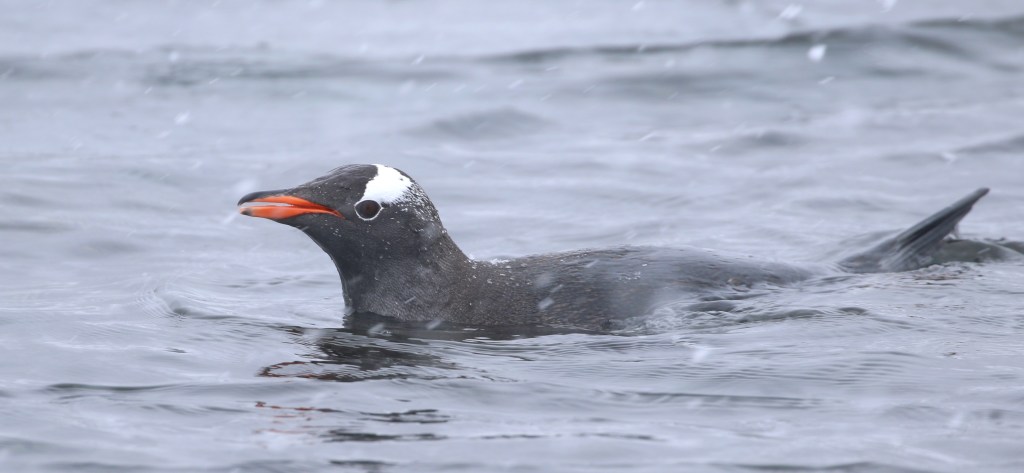
Expedition Cruising Antarctica
The Antarctica season is widely regarded as the highlight of the expedition cruising year, and for good reason! It is the most remote, spectacular, awe-inspiring, and all-round special place on the planet, and an expedition cruise is pretty much the only (and certainly the best) way to get there.
Expedtion cruise ships take you to Antarctica, and provide your accommodation and meals, and the ships Expedition Team (including the people who run Expedition Cruise Expert!) will take you out to explore and experience Antarctica. There are no ports and tour operators like you may be used to from cruising elsewhere. Strict itineraries are not available, the Expedition Leader and ships Captain will react to changing weather conditions, wildlife concentrations, and site availability to give you the best experience they can. The expedition team will take you ashore in zodiacs (small rubber boats with an outboard engine) and land you at penguin rookeries, historic sites and scenic beauty spots, or maybe even on the ice of the frozen sea itself. You will also be taken zodiac crusing, using the small boats to explore the waters for views of icebergs, glaciers and wildlife.
You’ll find a huge number of options for your visit to Antarctica, there are many companies/ships, and the season in long. None of the options is bad, no-one has ever regretted taking a trip to Antarctica, but there are a few things to consider, and these might make the difference between having a great trip, or having one of the best experiences of your life.
When to go
The Antarctic expedition cruise season operates during the southern summertime of November-March, and while there is no bad time to visit during this period, there are noticeable differences throughout the season
November
At the beginning of the season Antarctica is at its most raw, the winter is only just coming to and end, and ice dominates the landscape. If you want to see Antarctica at its most pristine, this is the time to come. The shores and mountains are covered in snow and many of the bays still have a thick layer of ice on the surface. While this does look extremely pretty, some of the landing sites may be difficult or even impossible to access. Most of the wildlife is only just starting to get active, penguins are starting to return to the nesting sites and courtship behaviour will be ramping up throughout the month. There will be some Whale activity, but most of the Humpback Whales have not arrived yet. This is the best month to see Emperor Penguins though, finishing off their crazy over-winter breeding cycle. On regular Antarctic Peninsula trips you may be lucky to see one or two isolated birds, but join a dedicated Emperor Penguin Expedition to see them at their breeding sites.
December
The season rapidly gets into full swing in December! Most of the penguins will be on eggs now, some of the northernmost sites might have very young chicks, and whales are appearing in good numbers. There’s still plenty of snow and ice around. Prices may be higher due to increased demand over the holiday season, and the number of ships is at its highest, don’t be surprised to see several other ships passingby each day.
January
The new year and the weeks following is my favourite time to visit Antartica. Penguin rookeries are at their busiest, with rapidly growing chicks of varying ages being cared for by both parents. The whales have arrived en-masse and are easily and frequently seen. Snow and sea-ice have retreated enough to allow access to most places, but there is still plenty of gorgeous scenery to marvel at.
February
If seeing penguin chicks at their most adorable is your prime motivation for visiting Antarctica, this is the time for you to visit. The chicks are well grown now, and up to all sorts of antics, gathering in creches for protection and warmth while both parents are away foraging for them. The increase in penguin activity does have drawbacks though, those pristine icy white landing sites are now covered in a stinky, thin, sloppy layer of pink guano i.e krill that has passed through a penguin chick… The waters of the Gerlache and Bransfield Straits, and many of the bays become ‘whale soup’, with great numbers of Humpback Whales feeding on the growing Krill swarms. The sea-ice has reduced through the summer months and pretty much all sites are accessible, and adventurous ships are more likely to push south to cross the Antarctic Circle, making for good bragging rights.
March
As the season draws to a close, Antarctic wildlife can be at its most abundant, at least early in the month. The penguin chicks almost look like adults now, but still act like the young fools they are, and they’ve made a right mess of the place. They’ll start to leave mid-way through the month. Humpback Whales are in their highest numbers, its almost difficult to scan over a body of water and not see one. Antarctic Fur Seals have arrived from further north and are noticeable on the beaches. As the days get shorter, you will be rewarded by the most spectacular sunrises and sunsets you’ll ever see, at reasonable times not requiring early starts and late nights.

Where to go
Antarctic Peninsula
The Antarctic Peninsula is by far the most popular destination for expedition cruises to Antarctica, and nearly all of the options available will bring you here. Most voyages will depart from Ushuaia (Argentina), or Puerto Williams (Chile) at the southern tip of South America, spend 2 days crossing the infamous Drake Passage, which you can read more about here, then spend 5-6 days exploring the Antarctic Peninsula. The peninsula is the northern-most part of Antarctica, making it the closest, fastest, and easiest to reach from ‘civilisation’. The northern position also gives it milder weather than other parts of the continent, making it most attractive for wildlife like penguins, seals and whales. Going further south into the continent the conditions are simply too extreme for most species to survive. This position and climate also made the peninsula the focus of early human exploration of Antarctica, and so this is where you will find the historic attractions like the refuge huts used b those first brave adventurers, some of which are restored and manged as mini-museums. Modern-day research bases are also located here.
Weddell Sea
Some Antarctic Peninsula cruises will also visit the Weddell Sea, which lies on the east side of the peninsula. In November, the Emperor Penguin rookeries are still active and cruises here will prioritise seeing these magnificent birds, often using a helicopter to take you across the frozen sea. Like regular Antarctic Peninsula expedition cruises, you can also expect to see plenty of the other penguin species, seals and whales, historical sites, and fabulous scenery. These trips also provide the best chance to walk on the frozen sea due to the location and early-season timing.
Ross Sea
The Ross Sea is a very different effort altogether, located on the opposite side of the continent, and accessed from ports in the south of Australia or New Zealand. The Ross Sea is much broader than Drakes Passage, and takes 5 days each way to cross, making this a much longer and more expensive cruise, and there are far fewer options available, with just a few voyages each season. For those with the time, patience and money, the rewards are great. You’ll stop at the sub-antarctic islands like Snares, Campbell and Macquarie to see huge rookeries of penguins, albatrosses, and seals. When you reach Antarctica you will be visiting some truly extreme places, like the Ross Ice-shelf, the largest floating ice-shelf in the world, and the area is home to the greatest numbers of the mighty Emperor Penguin, and the adorable Adelie Penguin.
South Georgia
If you have the time (and the money), some trips to the Antarctic Peninsula also include a few days in incredible South Georgia. This destination adds considerable to the duration and cost of your trip, its several extra days at sea each way, but I cannot recommend it enough, especially if you are a wildlife fanatic. The beaches of South Georgia are absolutely thronged with King Penguins and Antarctic Fur Seals, plus an array of other species, this is truly one of the greatest wildlife spectacles on Earth, so much so that we’ve written a page all about it here.
The Falklands
The Falklands are hugely underrated as a wildlife watching destination, presumably because they’re such an inconvenient place to get to. Most Antarctic cruises that visit South Georgia will also visit The Falklands for a few days. There are several privately owned islands which allow landings and visits to Black-browed Albatross and Rockhopper Penguin rookeries, offering the best viewing for these species that you’re likely to get anywhere in the world. The waters surrounding the islands are very rich, and along with plentiful seabirds you are liklely to see pkenty of cetaceans including Fin Whales and several dolphin species. The port facilities of Stanley allow ‘sail-only’ Antaarctica cruises on larger ships to stop here (using the ships tenders to come ashore), providing opportunities for passengers to see various penguin species up close.
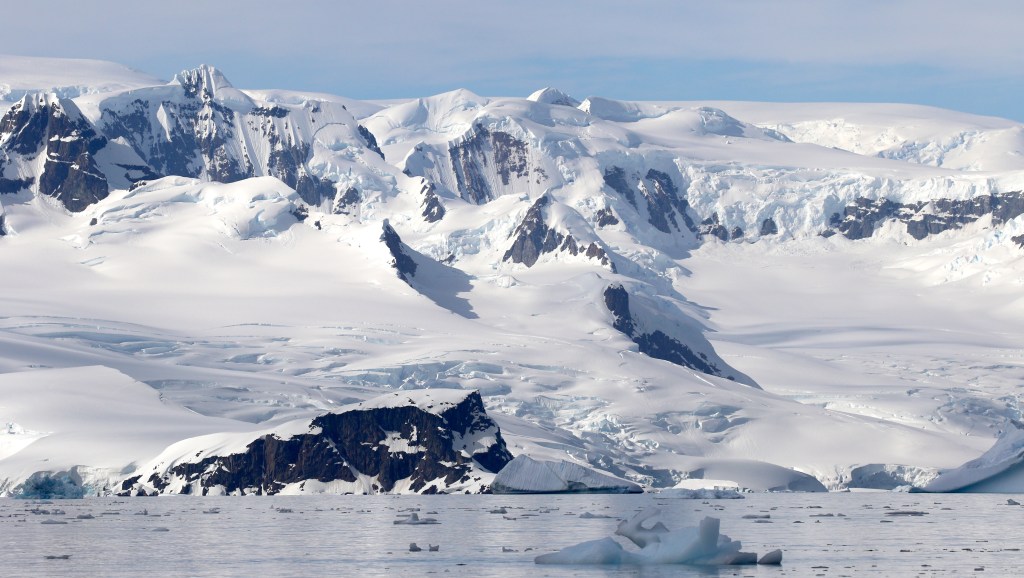
Which ship to go with
Nearly 50 ships operate in Antarctica each season. In many ways they all offer a very similar experience, as many factors are decided by the regulatory body for cruise ships in Antarctica: IAATO, they control which locations you are allowed to land at or zodiac cruise, how many people are allowed ashore at any one time, how long you are allowed ashore etc.
The main thing to consider is the size of the ship (by number of passengers) you travel on, as different restrictions apply to different size classes, and crucially, most landing sites only allow 100 passengers ashore at a time.
Smaller expedition cruise ships (less than 100 passengers) are permitted access to the most landing sites, and being able to take all the ships passengers ashore at one time means that your time at a site can be completed quickly, you can move to another location later in the day, and maybe even access a third site in the same day. Travelling on a smaller ship will give you more time exploring, but there are trade-offs which may or may not be important to you; smaller ships will have fewer facilities/restaurant options, reduced entertainment, are more vulnerable to bad weather when crossing the Drake passage (read more about that on our page here), and they are generally more expensive. Most smaller ships are pretty old too, the industry has favoured mid-sized ships for new builds, so a small ship may seem a bit ‘dated’ on-board.
Mid-sized expedition cruise ships (100-300 passengers) make up the bulk of the expedition cruise ship fleet, with most taking c200-250 passengers. These offer a nice balance between exploration and comfort.
Larger expedition cruise ships (300-500 passengers) provide the most comfortable way to visit Antarctica. Their bulk makes them less prone to rough seas in the Drake Passage, and they will have multiple restaurants and bars, evening entertainment options etc. But, with only 100 passengers allowed ashore at a time at most landing sites, it will take a whole day to complete a visit to a location, meaning you will only see one place each day, and spend most of the day enjoying the ship and the view from the ship in the time either side of your activity slot.
Sail-only Antarctica cruises Also bear in mind that some larger cruise ships go to Antarctica without stopping for you to explore on land. These cruises are usually far cheaper (like 1/10th the price of an expedition cruise!), and still allow you to experience Antarctica, just not in such depth. You can read more about these cruises on our page here.
What to bring
Many people are surprised to discover that travelling to the most remote and extreme part of our planet doesn’t actually require a huge amount of specialist equipment. Most expedition cruise ships will provide you with the essential items of a parka and boots, leaving you just needing waterproof trousers (you absolutely must bring these!), some thermal layers and items, and camera and binoculars. Read our article here for further details and recommendations.
 Expedition Cruise Expert